
Reading Plato Through Grief, Conditioning, Consciousness, and the Ethics of Knowledge
Reflections on Plato’s Final Dialogues and Republic through lived experience, ageing, embodiment, and modern systems of power


I recently began Ted Gioia’s 52-week immersive humanities reading project. What I expected to be a structured intellectual exercise has quickly become something far more reflective, existential, and unexpectedly personal.

This is not a book review nor an attempt to position myself as a philosophical historian or academic authority. Although, ironically, I have fallen down rabbit holes over the years to know how much I genuinely love this territory. During my postgraduate and master’s studies, I found myself pulled repeatedly toward questions around knowledge, reality, consciousness, and how we come to understand what we believe to be true. Once I started reading, I rarely wanted to come back out.
Perhaps that fascination started much earlier.
When I finished secondary school in Ireland in the 1990s, my first college choice was Philosophy and Theology. I remember my career guidance counsellor asking why I wanted to study it and assuming I wanted to become a religion teacher.
I went to an all-girls Catholic convent school. Philosophy and Theology probably sounded like a recruitment success story.
I laughed and said no.
I wanted to study it because I wanted to get to the bottom of all of it. I had grown tired of being presented with things as facts simply because someone had declared them to be true. I wanted to understand why people believed what they believed. I wanted to understand where ideas came from. I wanted to ask questions.
That part is important.
Because every time a question moved too far from the prescribed path, there was often a subtle message that followed: return to the point, stay on track, stop overthinking, stop questioning.
Over time, I think many of us learn that certain kinds of curiosity are welcomed and others are quietly exhausting for people.
So eventually I stopped asking.
I never went to college then. Life moved in another direction, and I pursued a career in finance more through circumstance than conscious choice. Looking back now, I can see how much of it reflected movement away from myself rather than movement toward myself. Eventually, that misalignment caught up with me.
Returning to university in my forties for postgraduate and master’s study felt less like becoming someone new and more like recovering someone familiar.
So perhaps Ted Gioia’s advice on How to Read Plato resonated for a reason:
Try to identify how these works challenge our own lives and force us to analyse our own aspirations and values.
Because I am not reading these texts to master them, categorise them, or perform expertise around them.
I am reading them through a lived lens.
Grief, ageing, embodiment, consciousness, neurodivergence, morality, and modern systems of power and perception.
I am also not reading them through a religious lens, nor with any intention of reinforcing one.
I am approaching them less as an expert and more as an observer, participant, and witness.
What surprised me most was not how ancient these works felt, but how psychologically contemporary they remain.
Week one focused on Plato’s Final Days of Socrates — Euthyphro, Apology, Crito, and Phaedo — alongside The Republic, Books I and VII.
What emerged almost immediately were recurring questions around:
justice and injustice
wisdom versus performance of wisdom
ethical responsibility
mortality
social conditioning
consciousness
inherited belief systems
enlightenment and responsibility
and the uneasy relationship between knowledge and power
But alongside Plato’s questions, another layer kept surfacing for me personally: my own relationship to learning itself.
As a child, I loved reading. I was the student who devoured books, excelled in spelling and language, and constantly searched for understanding beneath the surface of things. But I was also the child who asked too many questions. The child who wanted to stay with ambiguity longer than the classroom comfortably allowed.
I wanted to get to the answer, even when the answer itself remained subjective.
Over time, particularly within institutional education, you begin to realise that relentless questioning can become exhausting for other people. Schools often reward certainty, speed, conformity, and performance far more readily than deep inquiry, ambiguity, or philosophical curiosity. There is often far more emphasis on arriving at the “correct” interpretation than on remaining genuinely engaged in the process of questioning itself.
Looking back now, I think many of us learned to perform understanding long before we truly understood anything deeply.
For neurodivergent minds especially, that distinction can become profound.
There is a difference between lacking intelligence and lacking the right environment through which your thinking can fully emerge. A difference between understanding something deeply and being able to perform understanding in institutionally rewarded ways.
Somewhere between adulthood, work, caregiving, motherhood, chronic illness, burnout, and grief, I lost part of my relationship to immersive reading for a long time. Life narrows your cognitive bandwidth in ways that are difficult to articulate unless you have lived through it.
In some ways, this return to reading feels less like acquiring knowledge and more like recovering a part of consciousness I had neglected through survival and responsibility. That return has coincided with one of the biggest transitions of my life following the death of my father earlier this year.
And unexpectedly, it was Plato’s reflections on death, ageing, and philosophical calmness that resonated most deeply.
In Phaedo, philosophy is framed as preparation for death. Initially, that can sound abstract or overly mystical to modern ears. But read through lived experience, grief, and witnessing someone age honestly, it lands differently.
My father approached ageing and mortality with far more calmness and acceptance than modern society often permits. Not because he romanticised suffering, but because he seemed to gradually integrate the reality of mortality rather than spend his final years fighting the fact of it psychologically. That distinction stayed with me while reading both Phaedo and reflecting on Socrates’ conversation with Cephalus in Republic Book I.
Cephalus speaks about ageing not as pure decline, but as a release from certain appetites and anxieties that dominated earlier life. There was something unexpectedly familiar in that. Not because ageing itself is easy, but because I had witnessed something similar in my father's relationship with ageing and mortality.
Cephalus says in Republic Book I:
How well I remember the aged poet Sophocles, when in answer to the question, ‘How does love suit with age, Sophocles? Are you still the man you were? Peace, he replied; most gladly have I escaped the thing of which you speak; I feel as if I had escaped from a mad and furious master.’ His words have often occurred to my mind since, and they seem as good to me now as at the time when he uttered them. For certainly, old age has a great sense of calm and freedom; when the passions relax their hold, then, as Sophocles says, we are freed from the grasp not of one mad master only, but of many.
The truth is, Socrates, that these regrets, and also the complaints about relations, are to be attributed to the same cause, which is not old age but men's characters and tempers; for he who is of a calm and happy nature will hardly feel the pressure of age, but to him who is of an opposite disposition, youth and age are equally a burden.
Plato repeatedly returns to the idea that how we age often reflects how we have lived, what we fear, and what we remain attached to.
What struck me most was not Plato’s metaphysical certainty around the soul itself, but the deeper philosophical question underneath it:
What does it mean to live consciously in full awareness of mortality?
That question feels almost culturally suppressed now.
Modern systems often encourage us to remain distracted, productive, accelerated, optimised, entertained, and externally validated, while rarely creating meaningful space for sustained reflection around ageing, death, consciousness, or ethical living.
The Allegory of the Cave in Republic Book VII also felt far more psychologically complex than the simplified versions many of us encounter second-hand.
The cave is not simply about ignorance. It is about conditioning.
Inherited narratives.
Rewarded perception.
Socially reinforced reality.
Fear of ambiguity.
Resistance to destabilising truth.
Plato’s prisoner does not merely “learn facts”. He undergoes a painful psychological reorientation. Enlightenment is not comfortable. It disrupts identity, certainty, belonging, and familiarity.
What fascinated me most was not simply escaping the cave, but the ethical responsibility involved in returning to it.
If we gain insight, what responsibility do we have toward others?
And how do we share knowledge without superiority, manipulation, or performance?
That question runs quietly throughout all four dialogues.
In Euthyphro, Socrates destabilises inherited morality and exposes how fragile many definitions become under sustained questioning.
In Apology — not an apology in the modern sense of saying “I’m sorry”, but a defence or speech in defence — Socrates confronts public hostility toward inquiry itself and the discomfort that sustained questioning can create.
In Crito, he wrestles with moral consistency and whether injustice can ever ethically justify further injustice. Again and again, Plato returns to the tension between truth, power, ethics, and social comfort.
What also became increasingly clear throughout these readings was Plato’s suspicion toward sensory certainty. The senses can deceive. Perception is filtered. Reality is mediated through psychological and social prisms.
But I found myself resisting any simplistic rejection of embodiment itself.
The body is not meaningless.
Sensory experience is not worthless.
Embodied awareness often carries important forms of intelligence.
Perhaps the challenge is not rejecting perception entirely, but learning how interpretation becomes shaped by conditioning, fear, identity, trauma, ideology, and inherited systems of thought.
At times, I found myself thinking of the body and mind less as separate entities and more as prisms refracting perception differently. That metaphor stayed with me repeatedly throughout the week.
Another recurring question that emerged throughout these texts was deceptively simple:
What is knowledge for?
Modern culture often treats knowledge as accumulation, branding, status, monetisation, authority, or performance. But Socrates repeatedly frames knowledge instead as ethical responsibility.
Not certainty.
Not ego.
Not influence.
Not dominance.
Responsibility.
That distinction feels increasingly relevant in contemporary life, where the performance of intelligence and wisdom is often rewarded more visibly than humility, reflection, or ethical inquiry.
Reading Plato now, through grief and transition rather than institutional obligation, feels profoundly different than encountering philosophy purely academically.
The deeper I move into these questions, the less interested I become in mastery and the more interested I become in attention:
to grief,
to conditioning,
to mortality,
to perception,
to embodiment,
to consciousness,
And to what it means to live thoughtfully within systems that constantly shape how we think before we even realise we are thinking. Perhaps that is what this reading project is quietly becoming for me.
Not the pursuit of definitive answers, but the gradual widening of questions worth living alongside.
So I will leave these here, not as conclusions, but as questions that continued to follow me after week one.
Knowledge and truth
What is knowledge for if it does not deepen ethical responsibility?
How much of our perception is genuinely ours, and how much is inherited conditioning?
What perceives truth?
What distinguishes appearance from awareness?
Justice and systems
Who defines justice?
Who benefits from systems?
Can justice ever be fully objective when humans are socially and psychologically conditioned?
Who controls enlightenment?
Human value and usefulness
Is contemplation useful?
Is moral reflection useful?
Is care useful?
Is ageing useful?
What happens to human worth within systems that primarily value usefulness and productivity?
Selfhood and consciousness
What is the self?
What survives bodily limitation?
What is the relationship between mind, soul, body, and perception?
Wisdom and expertise
Can wisdom exist without humility?
When does expertise become ego?
How do we educate people capable of justice and rational thought?
Other things that stayed with me since my last article
On Regulation During Online Hysteria
On The Met Gala and Accessibility
James Marriott’s Brilliant Piece: The Dawn of The Post-Literate Society
This…

Quiet on the outside. Loud in the mind.
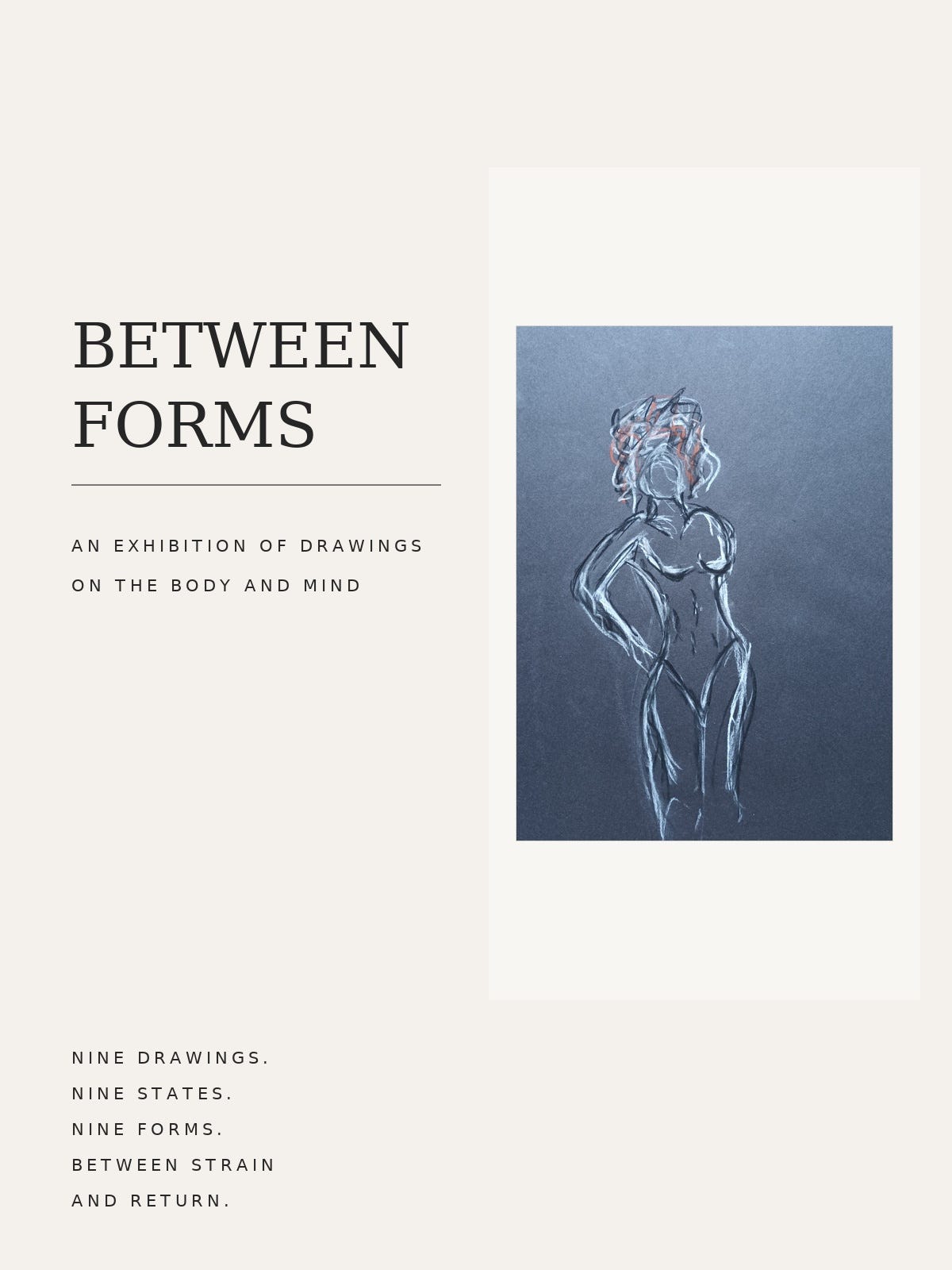
My online 3D art exhibition and new artwork website are launching soon, yay!
And so, until next time…
Grá mór.