
Where is Joy?
From something we lived to something we perform, optimise, and consume

Firstly, I’m still here. Hello. It’s been nearly a year since I last wrote here.
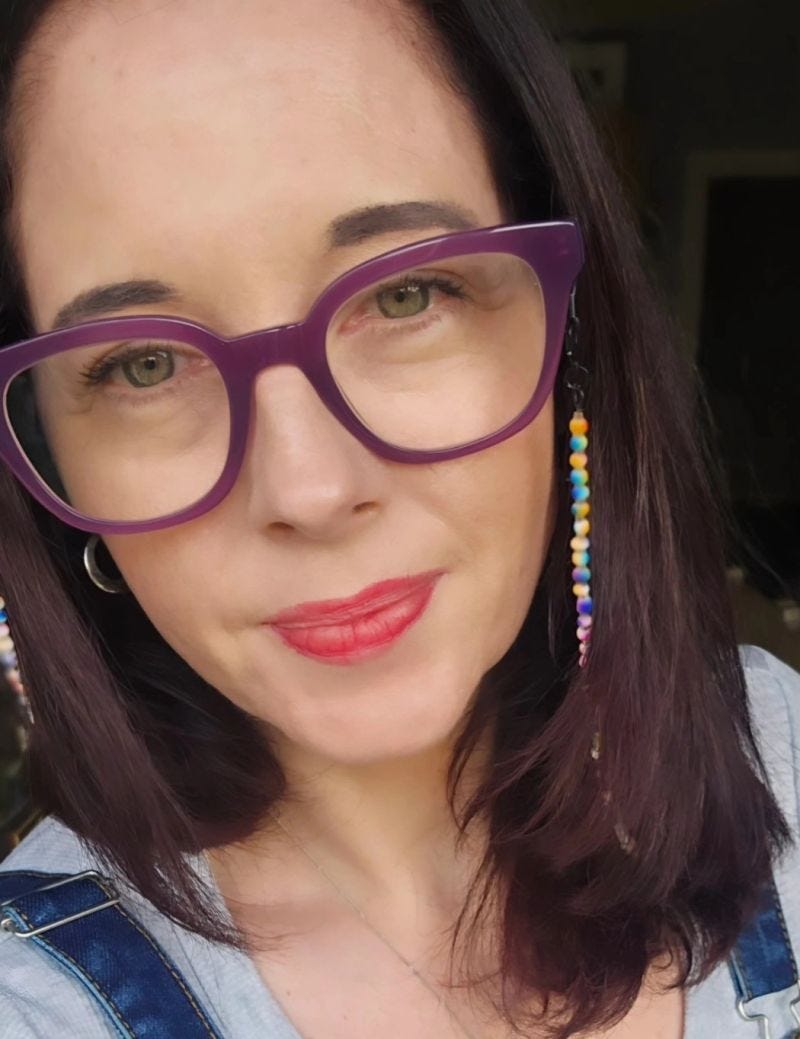
One of my last long-form posts, for context, sat in a place of misalignment and attempted realignment. At the time, my father’s health was declining, my own work was hectic and then abruptly dried up, and I was becoming increasingly exhausted. I wrote that piece to remind myself that when I can regulate and process one thing at a time, slowly and without external noise, I can navigate alignment and a sense of where I am in my body. I can hear myself in real time. I was reaching a stage where I couldn’t stop the noise, so I had to shut it out.
I’m still exhausted, to be honest. But who isn’t lately? I regularly wake up with that familiar moment of peering out from under the blankets and thinking, “Fuck, not this again.” But I am needing to find some form of stability, almost a ritualistic process now, to keep processing and progressing, and to remind myself that I can still find joy in sharing experience without trying to enforce it as anyone else’s truth. And so here I am again. A year on. So much has changed, yet so little has also. I am trying, in a different way, because for me, my kind of real joy is relational, unexpected, unsellable, and often coexists with grief.
There are many reasons for the gap. But for now, it is enough to say that a series of significant transitions has defined the past year.
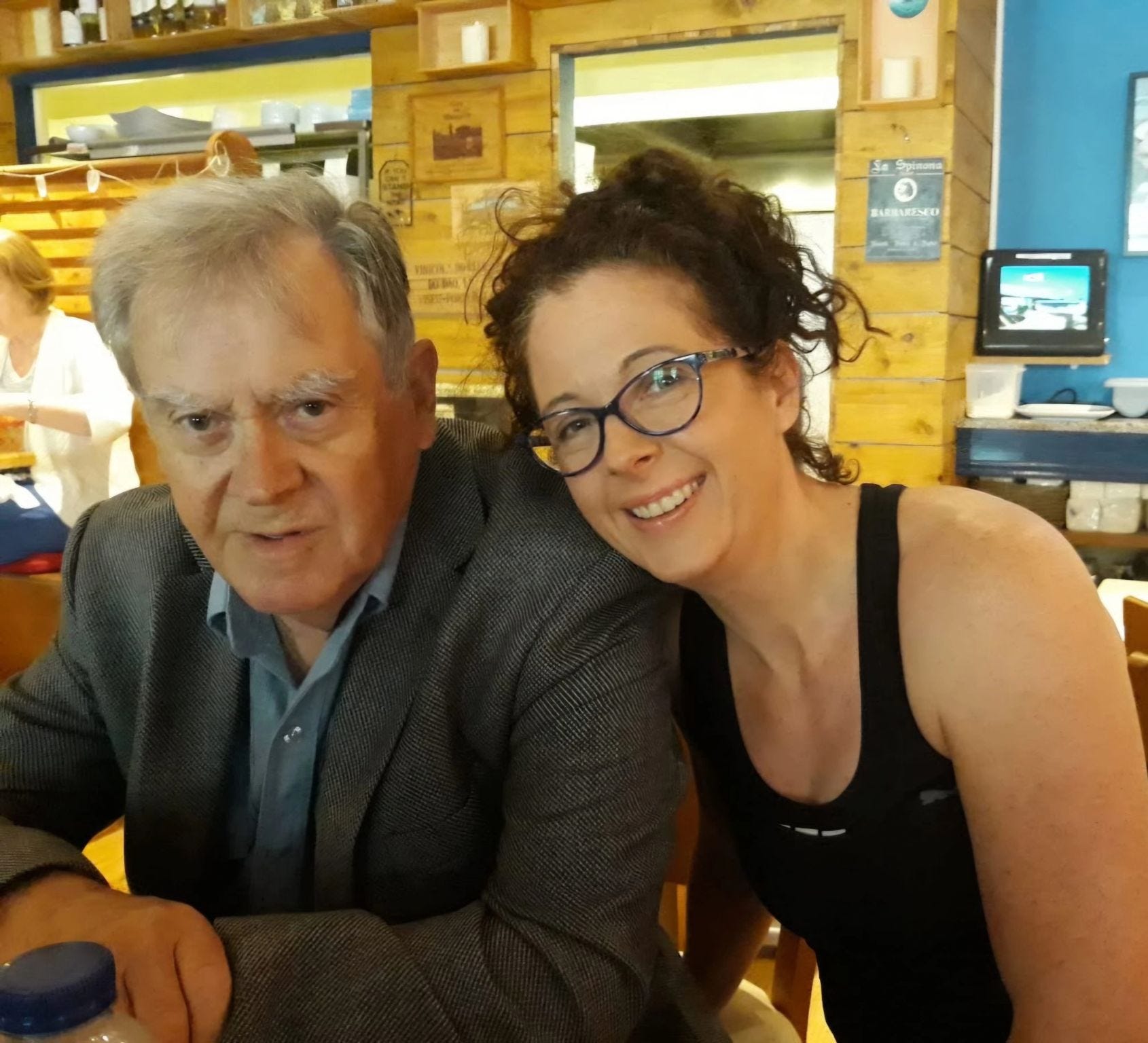
The biggest one was that my father’s health declined after a fall, and he passed away peacefully at 84 with me by his side on the 4th of January. He was one of the greatest loves of my life. I have never known a love like his. I am devastated and, at the same time, deeply shaped by the way he lived and the way he died. There was joy and stoicism in him, even at the end.
I walked with him through every stage of his death. It was long, natural, and unexpectedly profound. His cognition remained intact until minutes before the end. He knew he was dying for weeks. There were small rallies, moments of clarity, and many cryptic crosswords done together under the care of a truly compassionate nursing team. It is a privilege to accompany someone through a natural dying process. It is also deeply, calmly traumatic. Watching a body fail while the mind remains present is brutal. Watching the mind fail while the body remains is no easier.
There are no wins there.
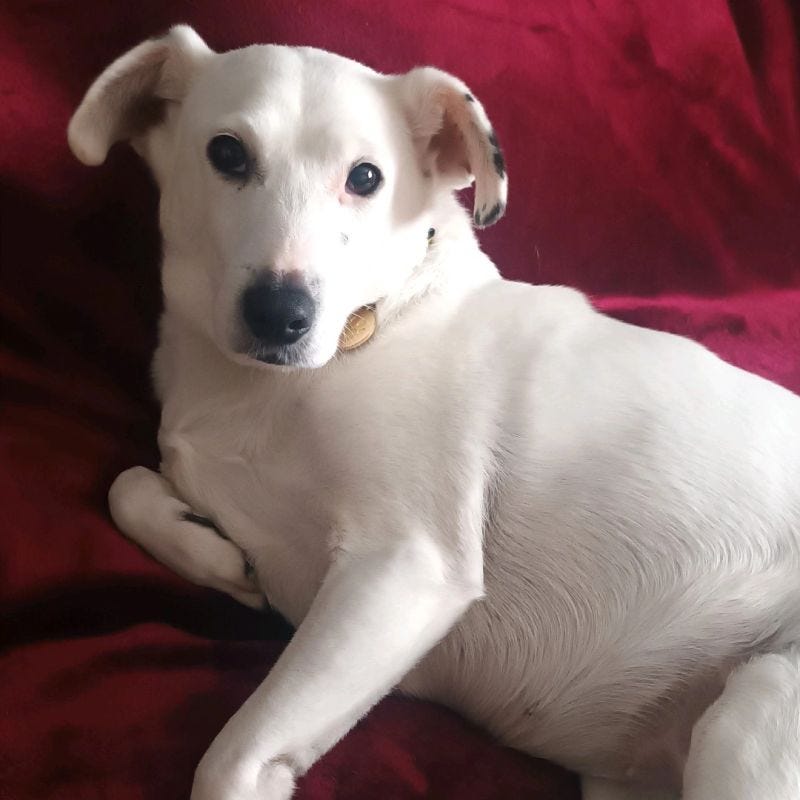
Amidst that, the beautiful rescue dog I had for only two years, Wendy, died suddenly. I never thought she wouldn’t be there with me through my grief, both selfishly for me and selflessly in the way only a dog can love. Her ashes now sit alongside my other dog I lost and, bittersweetly, alongside my father’s. I seem to be accumulating remains faster than I can make decisions about what to do with them. That is a level of decision paralysis I was not quite prepared for. I have written more about emotional support animal loss on my Substack here for those who want to explore it further.
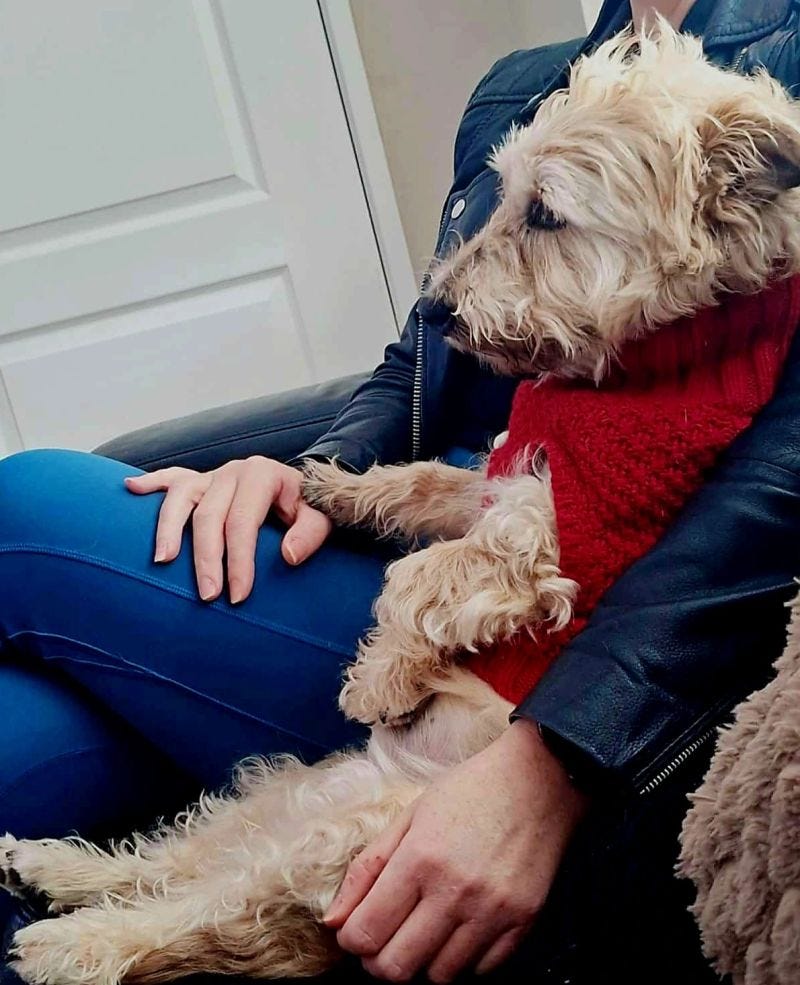
And then I got another senior rescue dog whose owner had also recently died, under similar circumstances. Say hello to Robbie, an 11-year-old Glen of Imaal Terrier. He was in a rescue centre ten minutes from my father’s nursing home. I showed him a photo of Robbie a couple of days before he died. He told me to get him.
So I did.
I picked Robbie up on the Monday after my father’s cremation. I have always had a soft spot for the senior ones. There is no illusion with them. You know the time is shorter. You know what is coming. But maybe that is the point. Because dogs, in their way, are with us for their whole lives, and we are only with them for a part of ours.
And still, we choose them.
And they still choose us.
I spent much of the summer in therapy with a neuroaffirmative psychotherapist, working through layers of grief that stretch back years, my mother’s sudden death, pregnancy losses, Autistic burnout, and everything that had been quietly intellectualised rather than fully felt.
At the same time, my son moved into his own home.
Another transition.
Grief does not arrive neatly. It connects across multiple layers across time. A wave of backdated emotional processing showed up alongside anticipatory grief for my father. I knew it was coming.
To distract myself, I practically renovated my father’s house.
In hindsight, I nearly broke myself doing it mentally, physically, and emotionally. But there was catharsis within it, as my father was within his own agency and autonomy, philosophically pottering alongside it all, deciding what he wanted to let go of and what he wanted to manage.
The intention was simple: to make it accessible so he could remain at home, and if needed, I would move in with him.
Instead, it now stands as something else entirely.
A kind of memorial to both my parents.
I can’t step inside it for weeks at a time, and the longer I leave it, the harder it gets. Then, when I am there, I don’t want to leave. The emotional labour of all-or-nothing grief.
It will eventually need to be sold. I’m not ready for that transition either. But I’ve been helped to reframe it as something I am holding, for now. A caretaker of memories past and space for someone else’s future.
That helps.
I also closed my company after nine years.
Not because I stopped caring or finding meaning and purpose within my work, but because I no longer had the capacity to hold the space people deserved.
I miss the work.
Deeply.
But I don’t miss the constant cycle of depletion and recovery it required. Group facilitation and one-to-one work are intense but so very rewarding. But there comes a time when the effects outweigh the reward, and you find yourself running in depletion mode as the default setting, approaching burnout. So I walked away from it to focus on my priorities, me and my father, and it was the right time.
Towards the end, I found myself in a situation that also forced a kind of reckoning. A young person I was working with expressed anger and distress that was entirely justified, but it activated something in me that I couldn’t ignore.
It was like looking directly at a younger version of myself. And so off I went with all that emotional baggage and delayed processing to my therapist to sit with.
There is no infrastructure when you work alone. No one to step in. No buffer.
You are your own safeguarding officer.
I turned 50 on New Year’s Eve.
My father held on for that milestone. I didn’t visit him that day. I knew it would be the last birthday with him, and I chose to protect myself as I was going to fall apart. That kind of self-protection is allowed in these moments. It was one of the only days I wasn’t with him during that entire period.
50 feels… different. Not in a dramatic way. Just real.
I’m not too old to do things. But I am old enough to feel the cost of trying to do everything. I have had lots of training injuries and stress-related high cholesterol (according to my doctor). My father used to say to me, “You see, all that lifting weights you do… You will just die, fitter!” I wish someone would say to me, “Oh, you look 50 and are embracing it with grace and dignity,” instead of “Oh, you don’t look 50”, as it pushes my literal brain to try and defy ageing even more, but I would rather accept it with grace.
And so, long story short, you’re kidding me! When have I ever told a short story? I’ve stepped into what is, for now, a deliberate pause, a break from structured work and perhaps a slow return to more reflective writing and creative artwork I’ve left behind for too long. As a neurodivergent person, I have come to recognise that transitions do not arrive gently. They are often all-consuming. All or nothing.
And right now, I am sitting in that in-between.
Trying to regulate it.
The emotional labour of the liminal space.
I also want to thank those who joined in the past year and those who stayed during the silence. I am so grateful for my 254 followers. I was never here to commercialise my writing, and I will always do my utmost to leave it all free to read and accessible to everyone. Because writing, when I return to it, is one of the few places where something steadier can emerge. Once I commercialise it, it starts to feel like a job. That’s not to take away from the many brilliant writers and creators who deserve to be paid for their work. I’m just not there yet.
For me, it’s currently context rather than commercial output.
It’s thinking and processing. And sometimes reclaiming something that gets lost in everything else. I’m not returning here with answers, just experience. It might be too long and too intense for some, but as a close connection reminded me, depth is so rare now; I need to return to it and embrace it. Just a willingness to pay attention again to what remains when the noise falls away. Maybe even joy, because I haven’t lost joy. I’ve maybe just been taught to look for it in the wrong places. So with that, I want to sit with that for a bit.
Where joy has gone.
And how, even now, it still shows up in life, in the liminal, in loss. And, for me, in something often described as Autistic joy. The kind that keeps you afloat when it feels like you’re going under.
The Question of Joy
There’s a line I came across recently from W. H. Auden:
“In times of joy, all of us wish we possessed a tail we could wag.”
It’s almost absurd in its simplicity.
But it lands.
Because it points to something very basic—something we seem to have complicated beyond recognition. I’ve been reading Radical Happiness by Lynne Segal, and one of the threads running through it is this:
We’ve lost a language for joy.
Not happiness. Not pleasure. Joy.
Because what we often call “joy” now looks different.
It can look like this:
consumption - this fills the space where collective, relational joy used to live
performance - the reward for the self-optimisation of oneself on display in survival-of-the-fittest mentalities
Scroll any Instagram feed, particularly as a woman, and it becomes hard to ignore.
That produces a very specific kind of human:
Functional, productive, and isolated enough to consume—where unmet emotional needs are redirected into market behaviour.
There’s a constant stream of instruction:
How to live better
Look better
Be better
So instead of:
belonging → community
meaning → contribution
joy → shared experience
You get:
belonging → brands
meaning → lifestyle signalling
joy → purchase cycles
And it’s relentless. But my kind of real joy doesn’t behave like that.
My kind of joy interrupts time, requires presence, cannot be manufactured, and does not accumulate. And it often coexists with grief. It doesn’t arrive on demand. For me, it arrives quietly. A shift in light through a crystal hanging near my window. A moment that interrupts everything for no reason at all. Gone as quickly as it arrives. In a glimmer. Blink, and you’d miss it. Noticing as a form of joy.
Not repeatable.
And it can be completely absorbing. I saw it in my father as well. Something as simple as watching the birds at his feeder. Pigeons and garden mice included. No hierarchy. No filtering.
No optimisation.
Just attention. Just presence.
There are similar descriptions in conversations around Autistic joy: those moments of deep absorption, sensory clarity, or unexpected awe. Monotropic mesmerisations. That ability to be stopped by something small. To feel it fully.
I’m not willing to lose that.
But this isn’t just about being Autistic. I think we’ve lost touch with those moments more broadly, because they don’t fit the consumption systems we’re living in.
So instead, we’ve replaced them with things that can be. And maybe that’s part of why everything feels so strained. Because no amount of consumption will ever replicate something as simple, and as honest, as a dog wagging its tail.
Or a child asking a question that cuts straight through everything.
Or an older person reminding you, without trying, what actually matters.
Joy Replaced by Consumption
If joy has become harder to recognise, it’s not accidental. It has, in many ways, been redirected. Long before social media, this was already being mapped out. Edward Bernays, nephew of Sigmund Freud, was one of the first to apply psychological theory to mass marketing. The idea was simple:
Don’t just sell products.
Shape desire.
If you understand people’s unconscious fears, longings, and insecurities, you can influence behaviour at scale. That work is explored in The Century of the Self, a documentary by Adam Curtis that lays bare how deeply these ideas shaped modern consumer culture. By the time The Hidden Persuaders by Vance Packard was published in 1957, the mechanism was already clear. Packard described people as:
“bundles of daydreams… hidden yearnings… guilt complexes… irrational emotional blockages”
And it was precisely those unconscious layers, he argued, that were being deliberately targeted and activated to drive consumption. What began as early advertising psychology has now evolved into something far more embedded.
Because now, the messaging is constant. Scroll any feed, and you’re not just seeing products, you’re seeing brand identities being constructed in real time, depicting consumption as a form of joy.
How to live.
How to look.
How to eat.
How to age.
For women in particular, this isn’t new, it’s just been rebranded. The Feminine Mystique by Betty Friedan captured an earlier version of this dynamic, where women were encouraged to find meaning, identity, and purpose through domestic perfection and consumption. What was sold then as fulfilment through the home now reappears as fulfilment through the self.
Different language.
Same underlying pressure.
What was once:
be a good homemaker
has become:
be an optimised, self-aware, emotionally regulated, aesthetically pleasing version of yourself.
It looks like empowerment.
But structurally, it carries a familiar undertone. A kind of domesticated sedation with home appliances, décor, beauty trends, and more. A pull back into roles, expectations, and ideals, just dressed in the language of confidence, choice, and self-improvement.
At times, it’s hard not to see echoes of The Handmaid’s Tale in that.
Not in form, but in function. And that’s where something subtle but important happens.
How to cope.
How to be.
And increasingly:
How to feel.
C. Wright Mills once warned that a culture increasingly shaped by consumption risks producing what he called “cheerful robots”. People who appear content on the surface, functioning, participating, consuming, but increasingly disconnected from something deeper.
Real joy, perhaps?
Constant stimulation. Endless engagement. And yet, underneath it, a relentless exhaustion. Joy, something that once arrived through relationship, environment, and shared experience, gets replaced by something else. Something that can be measured, displayed, improved, and purchased.
But the problem is:
Those things don’t resolve the underlying need.
They stimulate it. So you end up in a loop. You feel slightly off. You look for something to shift it. You’re shown what might help. You try it. And for a moment, it works.
Until it doesn’t.
And no amount of optimisation will ever replicate something as simple as:
Sitting with someone you love
Noticing light move across a room
Watching a dog respond to nothing more than presence
Because those things don’t ask anything of you.
They don’t require improvement. They don’t position you as lacking. They just meet you where you are.
As Packard and many post-war thinkers warned, the danger of consumerism isn’t just excess, it’s how easily it raises anxiety while quietly eroding a genuine sense of happiness and community. And that’s precisely why they’ve become harder to access.
Not because they’ve disappeared.
But because we’ve been trained, subtly and consistently, to look elsewhere.
Dependence, Independence, and What We Resist
There’s another thread here, and one we don’t talk about as comfortably. The idea that we are meant to be independent. Self-sufficient. Contained. Not needing too much from anyone. It’s held up as a kind of ideal. Something to strive for. But I’m not convinced it holds. This, for me, aligns with what Judith Butler calls precarity, the fact that we are fundamentally exposed, dependent, and finite.
Rowan Williams is a Welsh Anglican bishop, theologian and poet, who served as the 104th Archbishop of Canterbury from 2002 to 2012. Williams once spoke about joy in the context of dependence, suggesting that a fulfilled life is not one of complete independence, but one that recognises, and even embraces, our reliance on one another. That sits uncomfortably in a culture that increasingly values the opposite. Because dependence is often framed as weakness and fragility. Something to grow out of. Yet one will grow back into it as we age. We are precariously warned this is something to avoid and to delay for as long as possible.
And yet, if you live long enough, or closely enough to someone who is dying, that illusion doesn’t hold. I saw that with my father. Not just at the end, but throughout the process. The gradual shift and need for support. The collaborative negotiations of dignity. The tension between holding on and letting go. And I felt it too.
Not just in caring for him, but in what it brought up in me. Because I’ve spent much of my life leaning towards independence. Maybe being Autistic, I had to. It is not in a dramatic way, but it can be in a dysregulating way. All or nothing. If I cannot do it all, control the uncertainty and unpredictability, well then I am doing nothing. And I am terrified of what nothing might look like.
It shows up as:
self-reliance
internalising things
not asking for help
And that can work.
Until it doesn’t.
Because independence, taken too far, becomes isolation. I can feel that now, in this pause. Stepping away from my work. Losing a structure that connected me to people, purpose, rhythm. There’s freedom and privilege in it. But there’s also a disconnection. And maybe that’s part of the wider picture. We’re encouraged to become self-contained.
To manage ourselves.
Regulate ourselves.
Optimise ourselves.
But we’re not designed to exist like that. We are, whether we like it or not:
Interdependent. And perhaps joy has something to do with that. Not in a performative, collective sense. But in the graceful recognition that:
We affect each other
We rely on each other
We are shaped by each other
Maybe joy doesn’t sit in independence at all, but in the spaces where we allow ourselves not to be. Like returning to my father’s house this week after a month’s absence and finding joy in his loss. The garden, the birds, his books, his records, our safe space.
And so, I find myself here.
Not returning to perform.
Not returning with answers.
Just returning to think and write in a way that feels slower.
Less concerned with noise, output, or visibility.
And more concerned with what actually holds me as I process things more deeply. Because if there’s anything this past year has shown me, it’s that much of what we chase doesn’t stay. And much of what stays isn’t what we were taught to chase. I’m more interested in noticing what sits underneath it.
What gets lost.
What gets overlooked.
What still remains, even when everything else shifts.
And maybe that brings me back to something that is simply part of my whole self.
Autistic joy… my kind of awe.
The ordinary, not extraordinary. Not the excess that’s forced on us. The kind of ordinary, content joy my father found in each day.
I’m conscious I’ve said a lot, and yes it is a lot to process, so if you have made it to here, I want to leave you with a poem by Pablo Neruda—Ode to Things—where he writes about ordinary objects.
Pliers.
Scissors.
Cups.
Rings.
And how they carry the trace of the hands that held them. The imprint of use. Something human, left behind. I used to love that as a child. Touching things.
Still do.
A connection that doesn’t need explanation. And I sometimes think we lost some of that. Or at least became more cautious of it. During the pandemic, touch itself became something to fear. Don’t touch this. Don’t touch that. Keep your distance. And even before that, I remember being in a market as a young child, reaching out, touching things, and being roared at by a stall owner and told not to. It stayed with me.
Not as a lesson in behaviour.
But as a kind of interruption.
Because maybe joy is as simple as that.
Contact.
Attention.
Presence.
Not something to acquire.
Not something to optimise.
Not something to perform.
Just something we recognise when we’re close enough to feel it.
Grá mór.
oh yes someone said the j word
Thank you for writing this. ❤️